
Alternatives to Guesswork in Distribution Sales
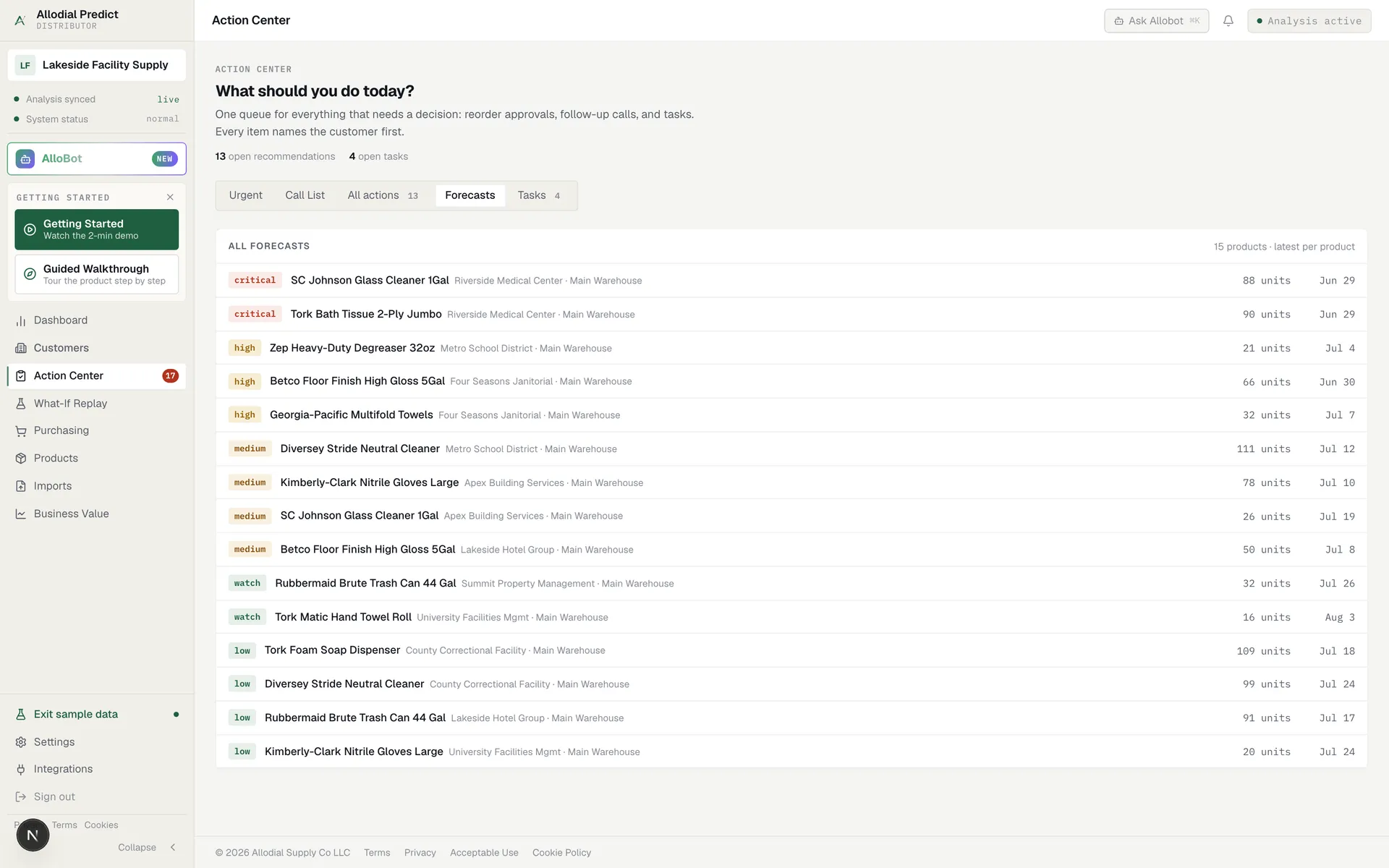
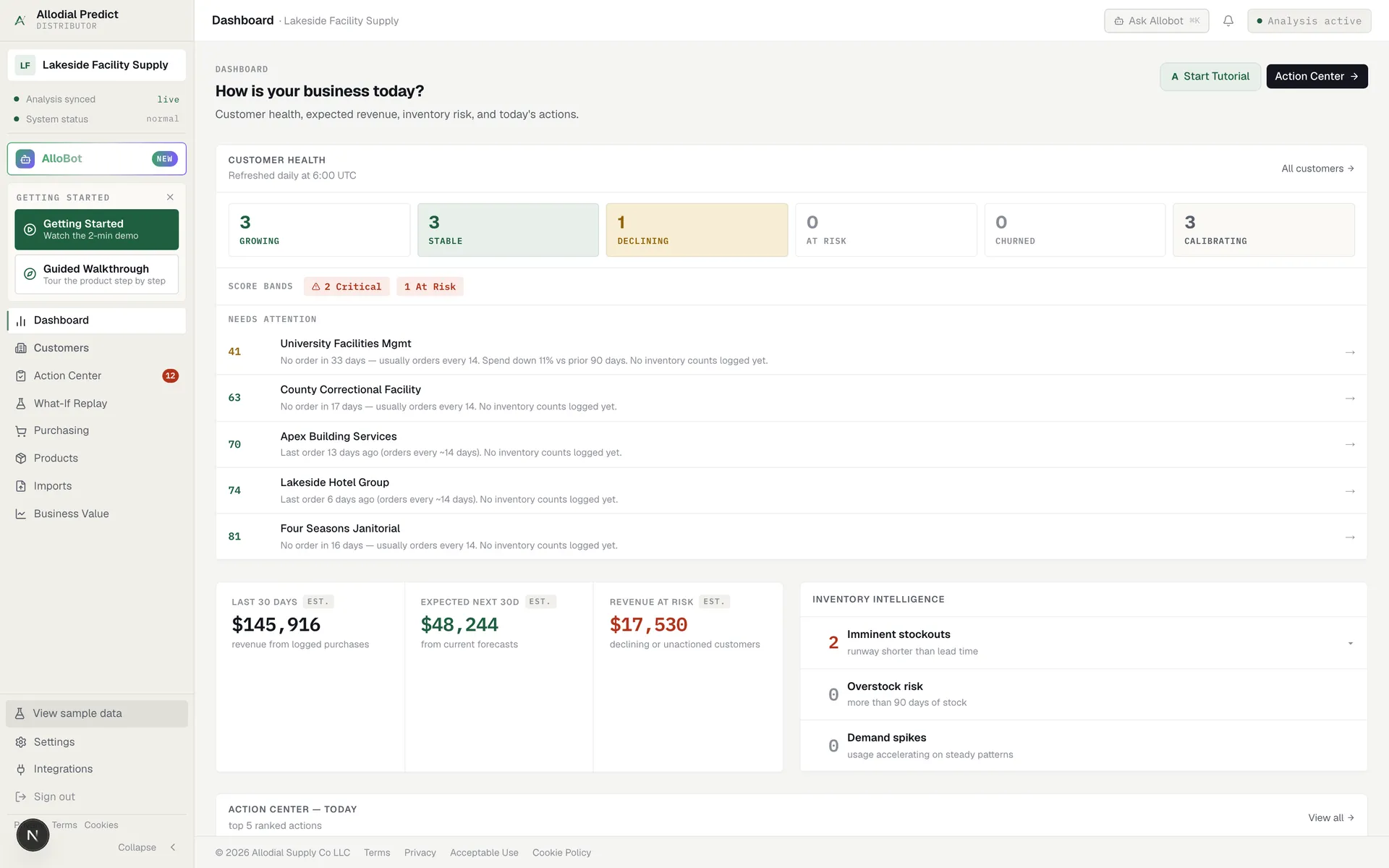
The alternative to guesswork in distribution sales is letting order history decide who to call. Instead of relying on memory or gut to guess which wholesale accounts are slipping, a reorder-timing tool reads each customer's reorder patterns, flags who is due to reorder, and ranks the day by revenue and risk.
What guesswork actually looks like
Guesswork in distribution sales rarely feels like guessing. It looks like a rep starting the day with a rough sense of who to call, driven by memory, a recent conversation, or whichever account happens to come to mind. It works well enough for the accounts that are top of mind and quietly fails for the ones that are not.
The alternative is to let the record do the deciding. Order history already knows, to the day, when each account usually reorders and which ones are overdue. Reading it is more reliable than remembering it, and it treats every account the same whether or not the rep happens to think of it.
Order history vs guesswork at a glance
A sharp rep's instinct and a reorder-timing tool are not enemies. The comparison below is about which one you want carrying the routine, high-volume decision of who to call.
| Capability | Allodial Predict | Guesswork and memory |
|---|---|---|
| Flags which customers are due to reorder | ✓ | ◐ |
| Consistent across every account, not just favorites | ✓ | – |
| Catches steady accounts drifting quiet | ✓ | ◐ |
| Survives a rep leaving or being out sick | ✓ | – |
| Reads the full order history, not the memorable accounts | ✓ | – |
| Applies a rep's relationship judgment | ◐ | ✓ |
| Ranked daily call list by revenue and risk | ✓ | – |
| Scales past what one person can hold in their head | ✓ | – |
Where experience and judgment still win
Guesswork gets a bad name, but a seasoned rep's instinct is real. Someone who has run a territory for a decade knows which buyer is about to retire, which account is price-shopping, and which relationship needs a personal touch that no record captures. That judgment is valuable, and no tool replaces it.
The goal is not to overrule the rep. It is to stop spending that judgment on the mechanical question of who to call, so it can go toward how to handle the call once the account is in front of them.
Why gut feel breaks down at scale
The trouble is that memory does not scale and does not stay current. A rep can hold maybe forty accounts in their head with any accuracy. Past that, the quiet, steady, unglamorous accounts are exactly the ones that slip, because nothing about them is memorable until they stop ordering.
Guesswork also carries a bias: reps call the accounts they like and the ones that shout, while the fading middle goes untouched. And when a rep is out sick or leaves, their mental map walks out the door, and coverage of that book falls apart until someone rebuilds it by hand.
The failures are quiet, which is what makes them dangerous. A missed pipeline deal is obvious, but a steady account that guesswork simply forgot does not raise its hand. It just orders a little less, then not at all, and the gap only shows up in a revenue review months later when it is too late to act on.
What replacing guesswork looks like
Replacing guesswork does not mean ignoring instinct. It means giving every account the same steady attention that memory can only give a handful.
- Order history flags who is due, so no account depends on being remembered
- A ranked list puts the highest-stakes accounts first
- A plain reason for each account, so reps can apply judgment on top of the signal
- Coverage holds when a rep is out or a territory changes hands
Which one is right for you
If you have a handful of accounts and a rep who knows every one, guesswork can carry you further than you would expect. Once the book grows past what one person can track, gut feel quietly starts costing accounts. The strongest setup keeps the rep's judgment and adds order history underneath it, so instinct is spent on the calls that need it rather than on remembering who to call. Think of it as a floor under the memory, not a replacement for it: the data guarantees no account is forgotten, and the rep decides what to do about the ones that surface.
What reps actually work from.
Common questions
Does a reorder-timing tool replace an experienced rep's judgment?
No. It replaces the guesswork about who to call, not the skill of handling the call. Order history decides which accounts are due and ranks them; the rep still brings the relationship knowledge, timing, and judgment that no record captures. The two work best together, not in place of each other.
See which accounts are due before the phone rings.
Allodial Predict reads your order history and surfaces the accounts that need a call today.